Project

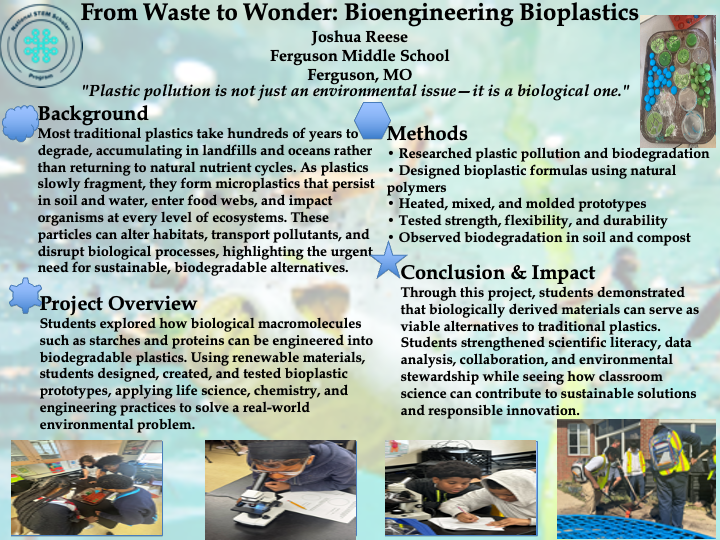
From Waste to Wonder: Bioengineering Bioplastics

Intro

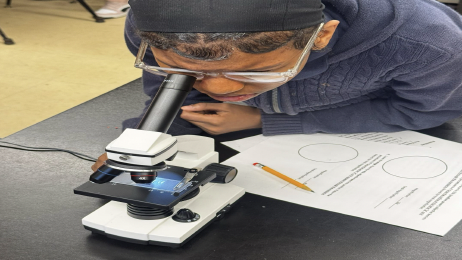
Students tackle a real-world problem: replacing petroleum-based plastics with biodegradable alternatives made from natural materials. They research how plastics fragment into microplastics that persist in soil and water, then design bioplastic formulas from starches and proteins, heating, mixing, and molding prototypes. Students test their bioplastics for strength, flexibility, and durability, and observe how microbes in soil and compost break them down over time.

Science Domains: Engineering, Technology & Applications of Science, Life Science, Physical Science

NGSS Standards: MS-ESS3-3, MS-ETS 1-3, MS-ETS 1-4, MS-LS2-3, MS-PS1
Project Poster

Download the project poster as a PDF. The project poster includes a description of the challenge, learning goals, and a list of materials and references.

Download The Poster (PDF)

Learning Objectives

Students will be able to:

  • Explain how plastic pollution and microplastics affect organisms and ecosystems.
  • Describe how natural polymers can be chemically transformed into synthetic materials.
  • Design, build, and test bioplastic prototypes against criteria for strength, flexibility, and durability.
  • Observe and analyze biodegradation to explain how decomposers cycle matter through ecosystems.